Back to Home

Designing a clinic's AI front desk and booking funnel: ROAS from 2.3x to 7.5x

RoleProduct designer, sole designer and builder
Year2026
ServicesProduct Design, UX Design, AI Product
7.5xreturn on ad spend, up from 2.3x
R$ 50per booking that came from an ad, down from R$ 123
55 → 145bookings from ads, with about the same spend
The challenge

The clinic paid for ads that led to WhatsApp, where people waited in a reception queue. Messages sent at night sat until the next morning, and nobody could tell which ad was bringing appointments.

What I did

I read 908 real conversations, then designed the team's daily tool around the chat: a funnel that moves by itself, booking inside the conversation, an AI that leads when reception is away, and a campaign view that ties each booking to its ad.

The outcome

With about the same ad spend, bookings from ads went from 55 to 145, the cost per booking fell from R$ 123 to R$ 50, and ROAS went from 2.3x to 7.5x.

How it was measuredClick-to-booking attribution built into the dashboard: Google Ads and Meta spend against the value of bookings traced back to an ad, checked against the clinic's current management software; 28 days before and 34 days after the new funnel. Realized value after no-shows and cancellations is estimated at about 1.4x before and 4.6x after.

01

The chat lives inside the funnel

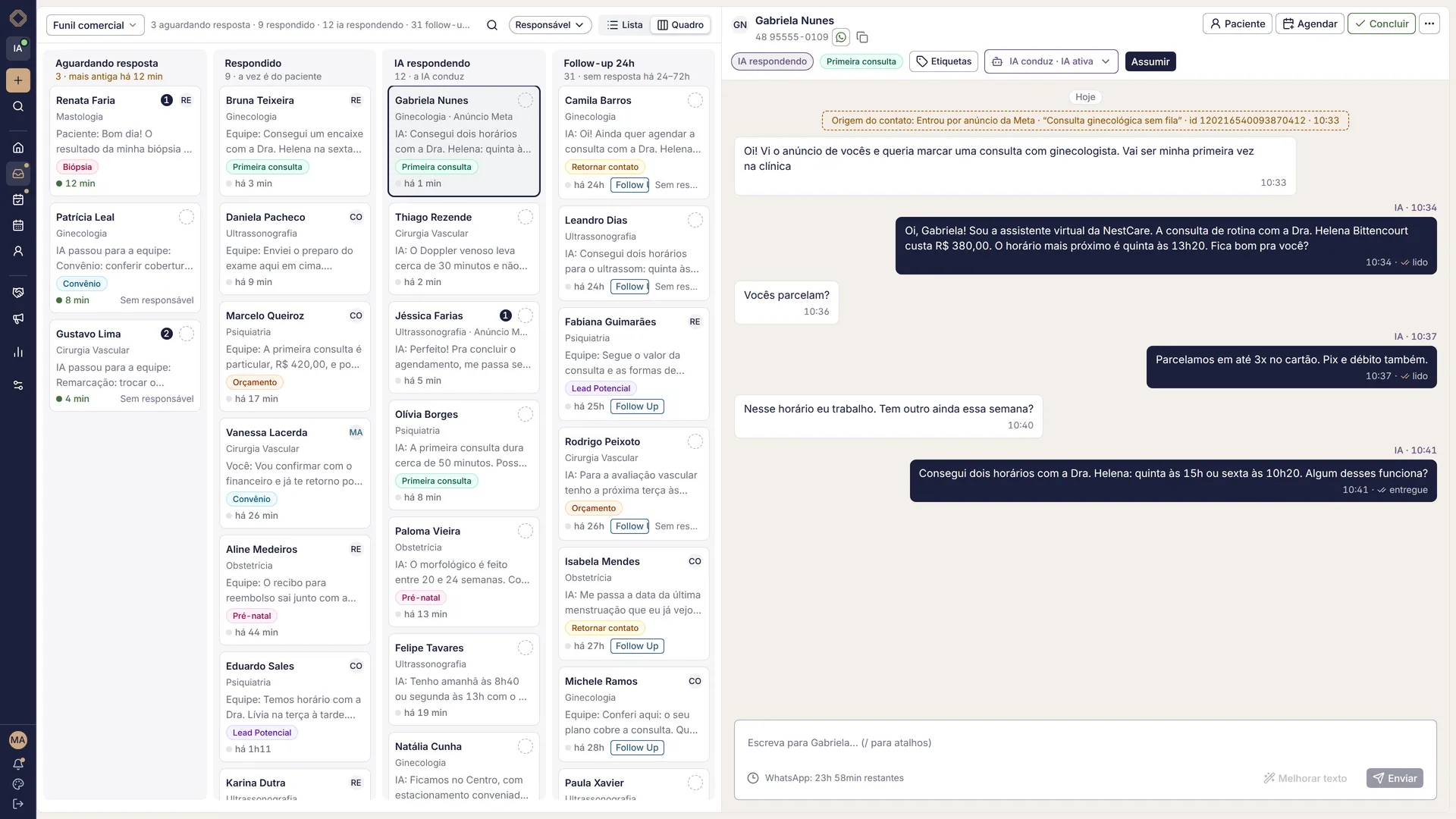
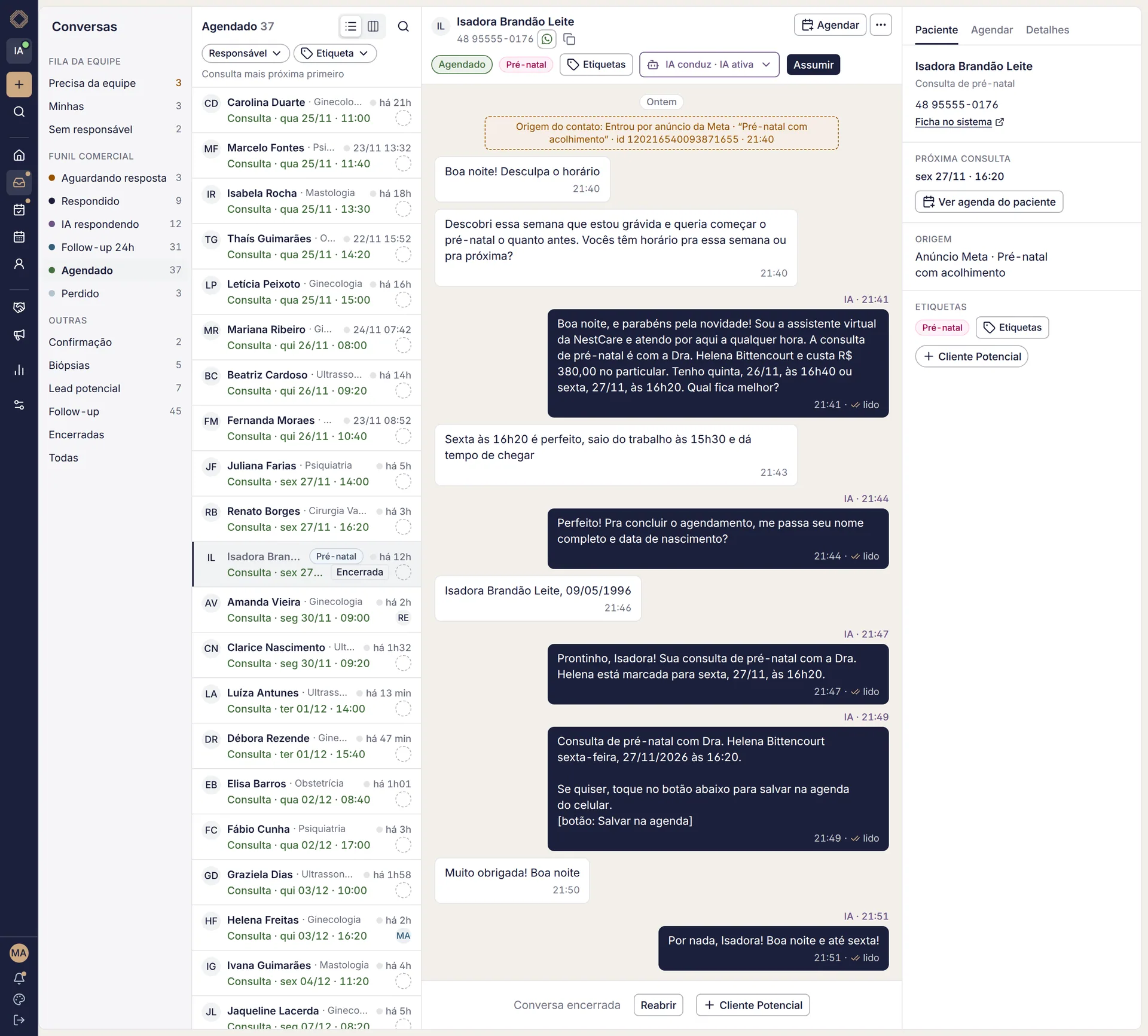
Sales funnel

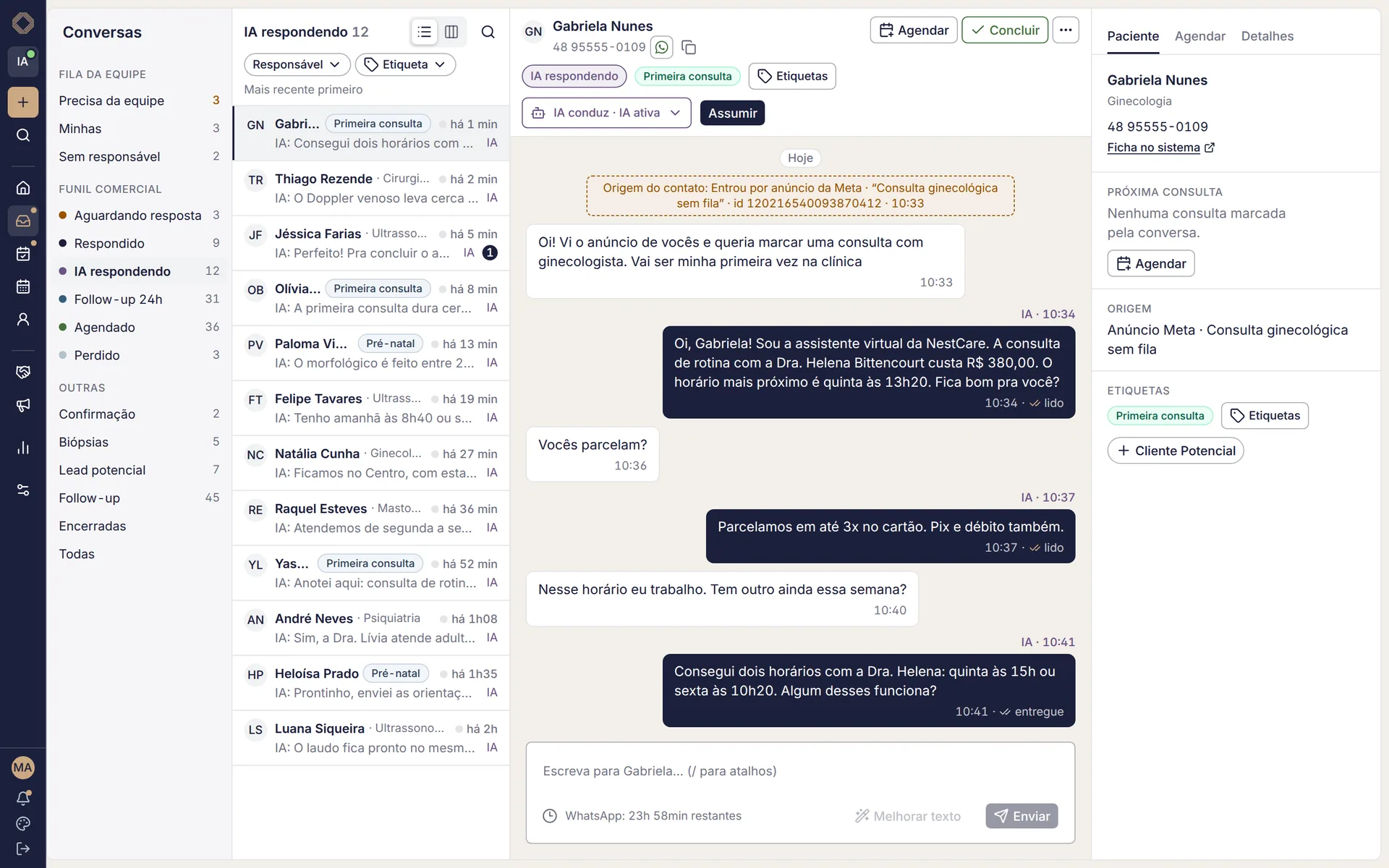
Reception was selling over WhatsApp with nothing but an inbox to tell who was close to booking and who had gone quiet. I turned that inbox into a funnel. Every conversation sits in a stage, and the stage moves by itself as people reply... nobody has to remember to drag a card.

Open a card and the chat is right there, beside the board. Whoever is answering never leaves the funnel to do it.

02

Book without leaving the conversation

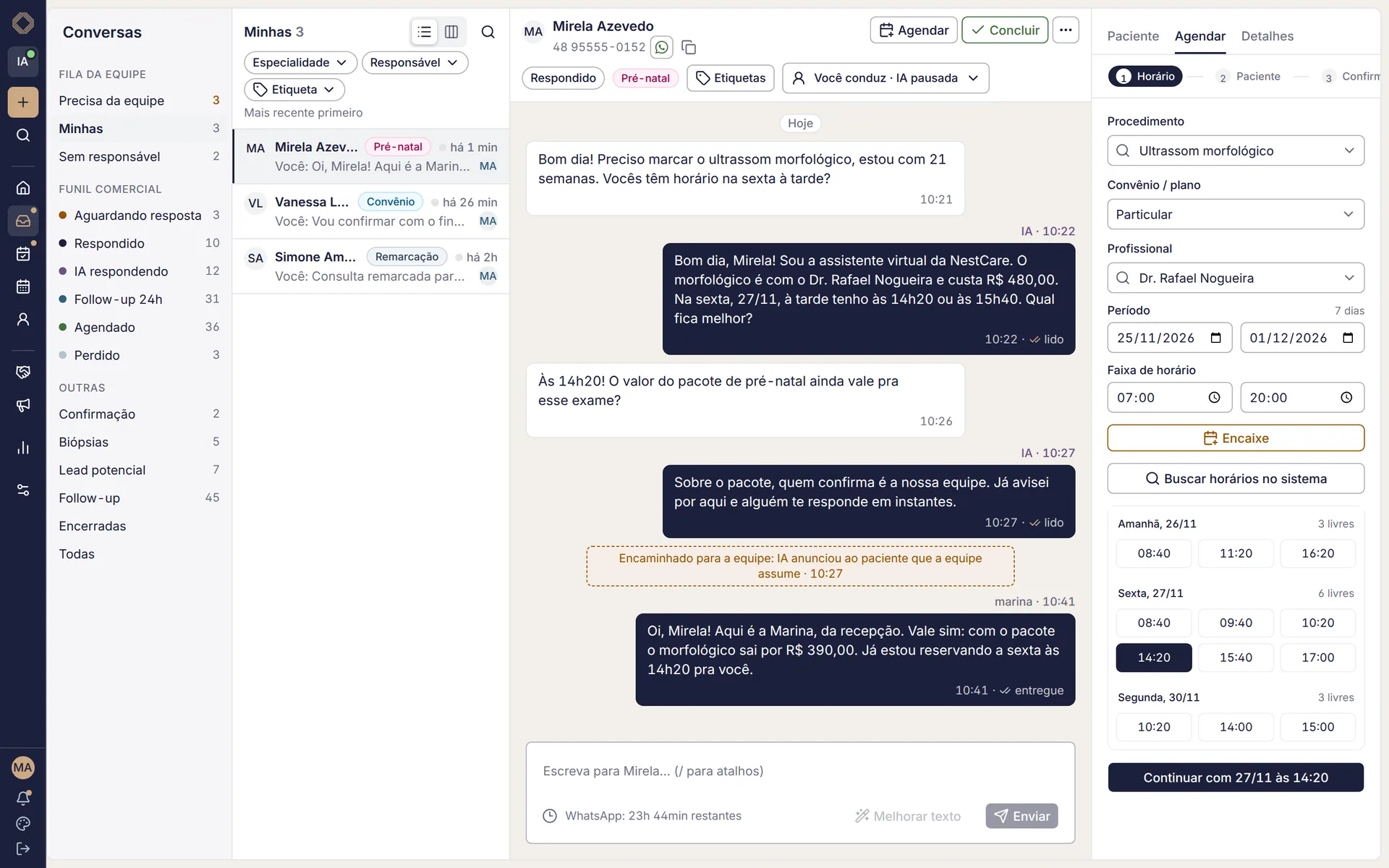
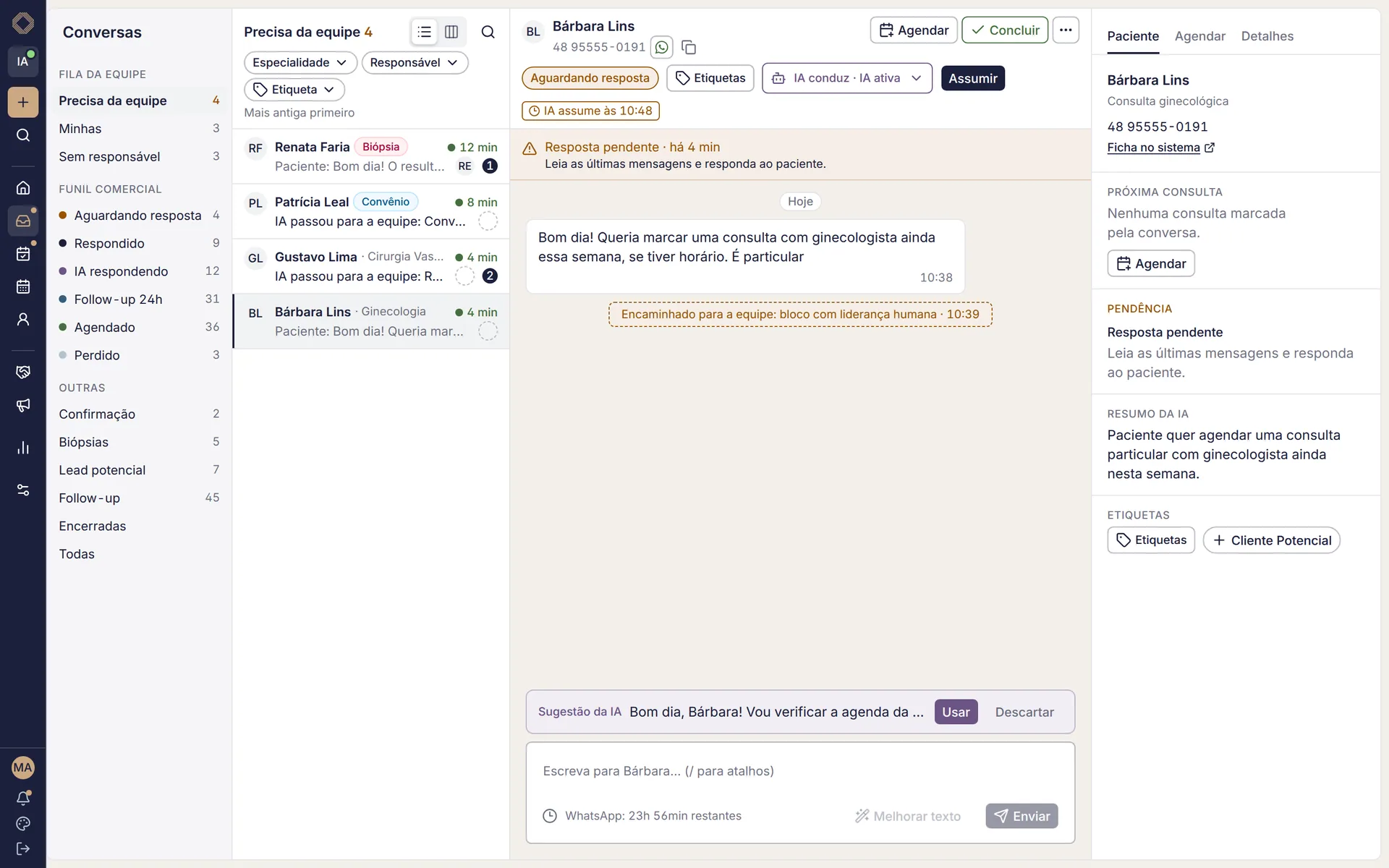
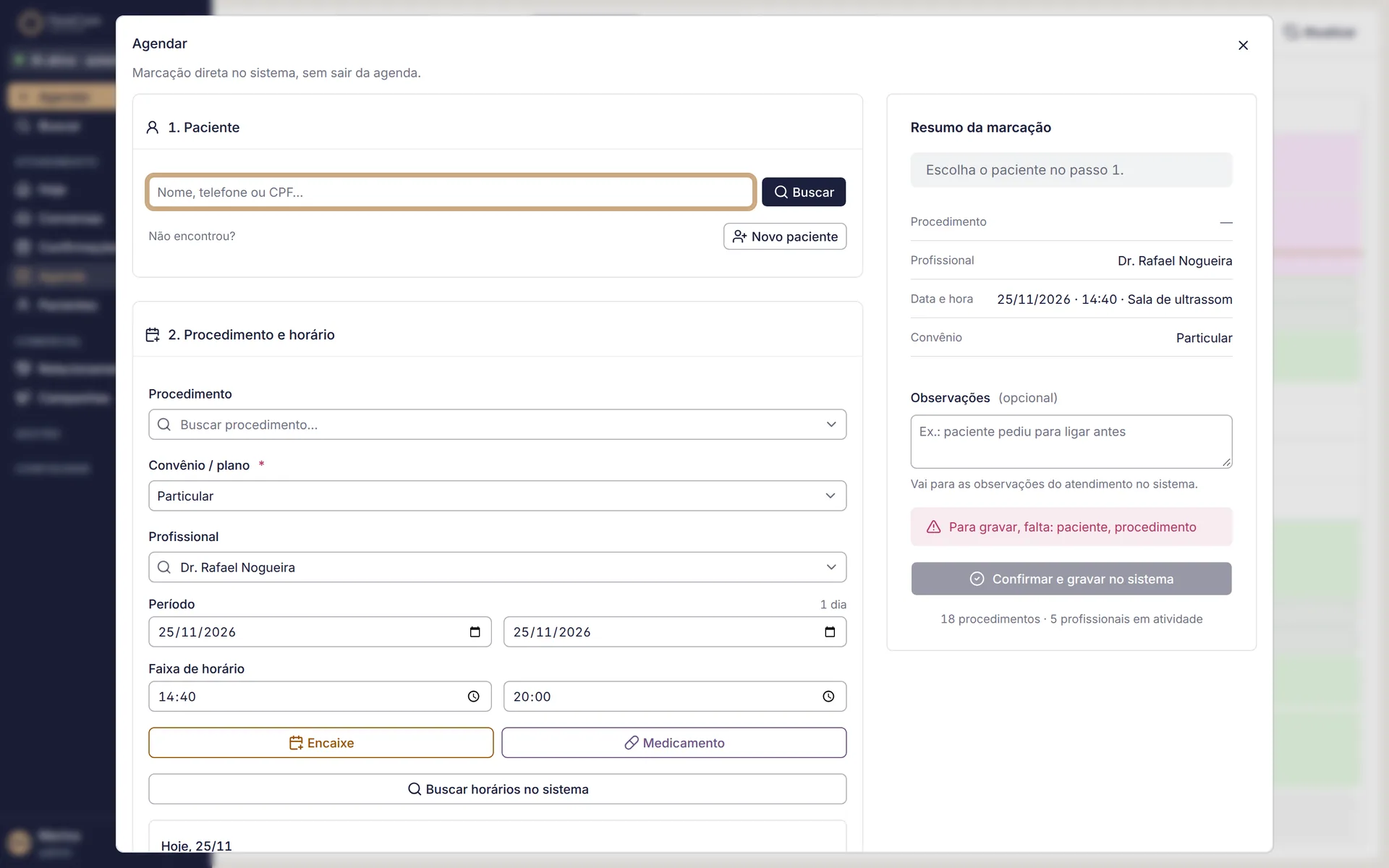
Booking and ready replies

Booking used to mean switching windows: find a time in the clinic's management software, come back, type it to the patient. Now the agenda opens beside the conversation. Reception picks the exam and the doctor, sees the free times and books right there.

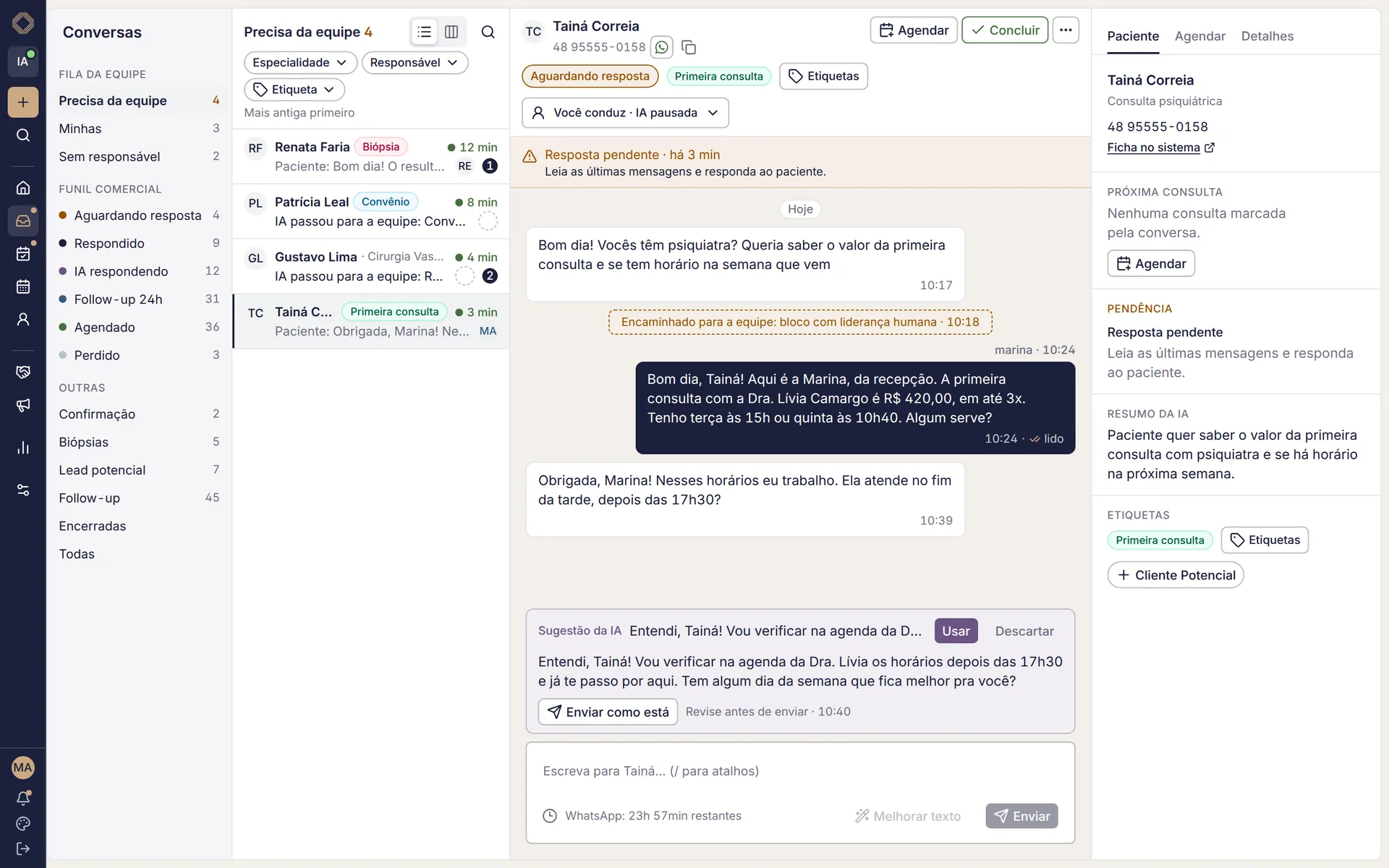
The typing got shorter too. When it's the team's turn to answer, the AI leaves a reply drafted. They read it, change what they want and send.

03

When reception goes home, the AI takes over

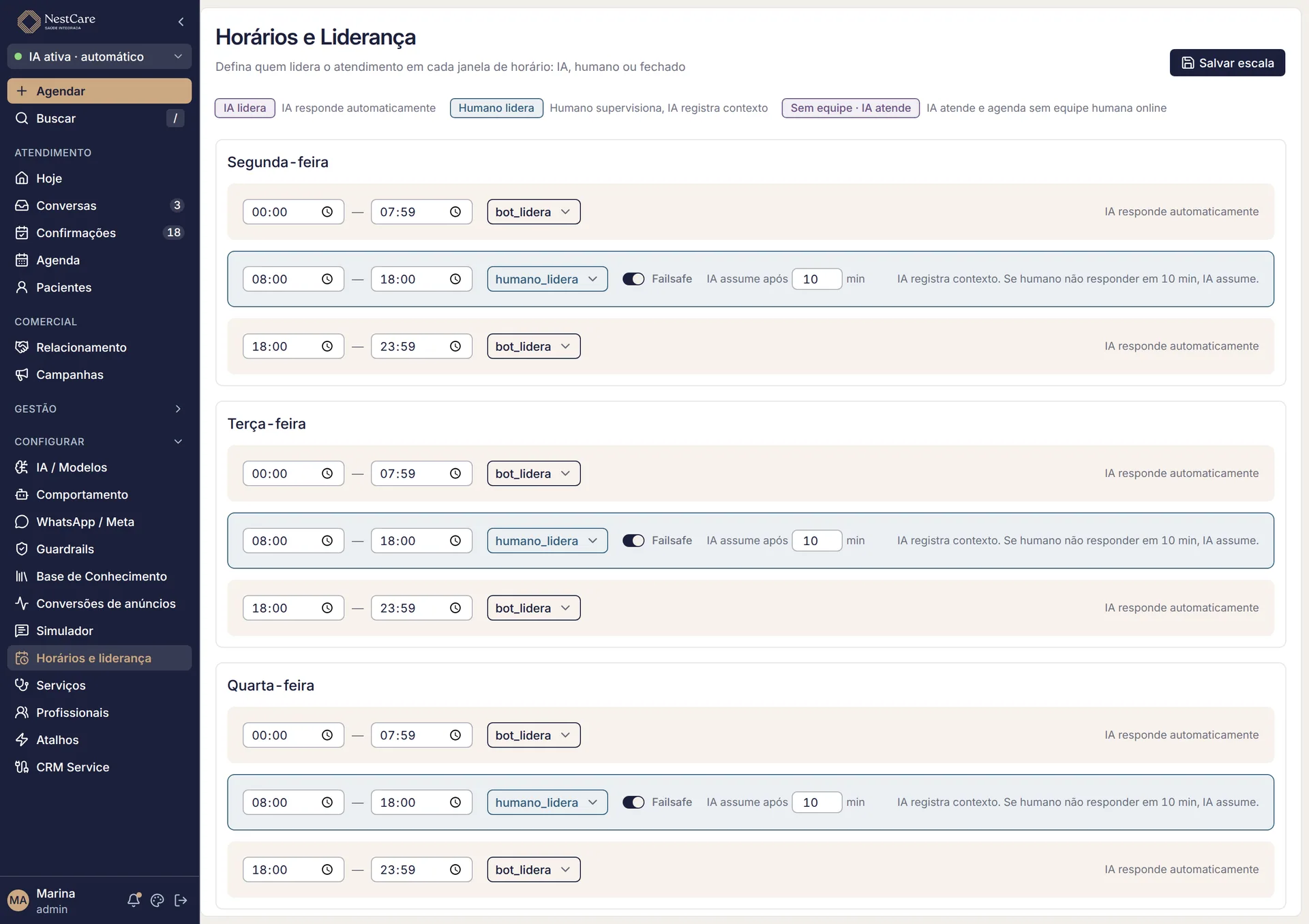
After hours and the failsafe

Patients don't keep office hours. So the clinic sets, for each day and time, who leads the conversations: the team or the AI. When the day ends, the AI picks up every conversation left open and answers whoever was still waiting. In the morning, each one goes back to the person who was handling it.

During the day there's a failsafe. If a lead waits too long for a person, the AI steps in, and the conversation shows the exact minute that will happen. The team has to trust all of this, so taking a conversation over is always one click away.

04

Tomorrow, confirmed in one pass

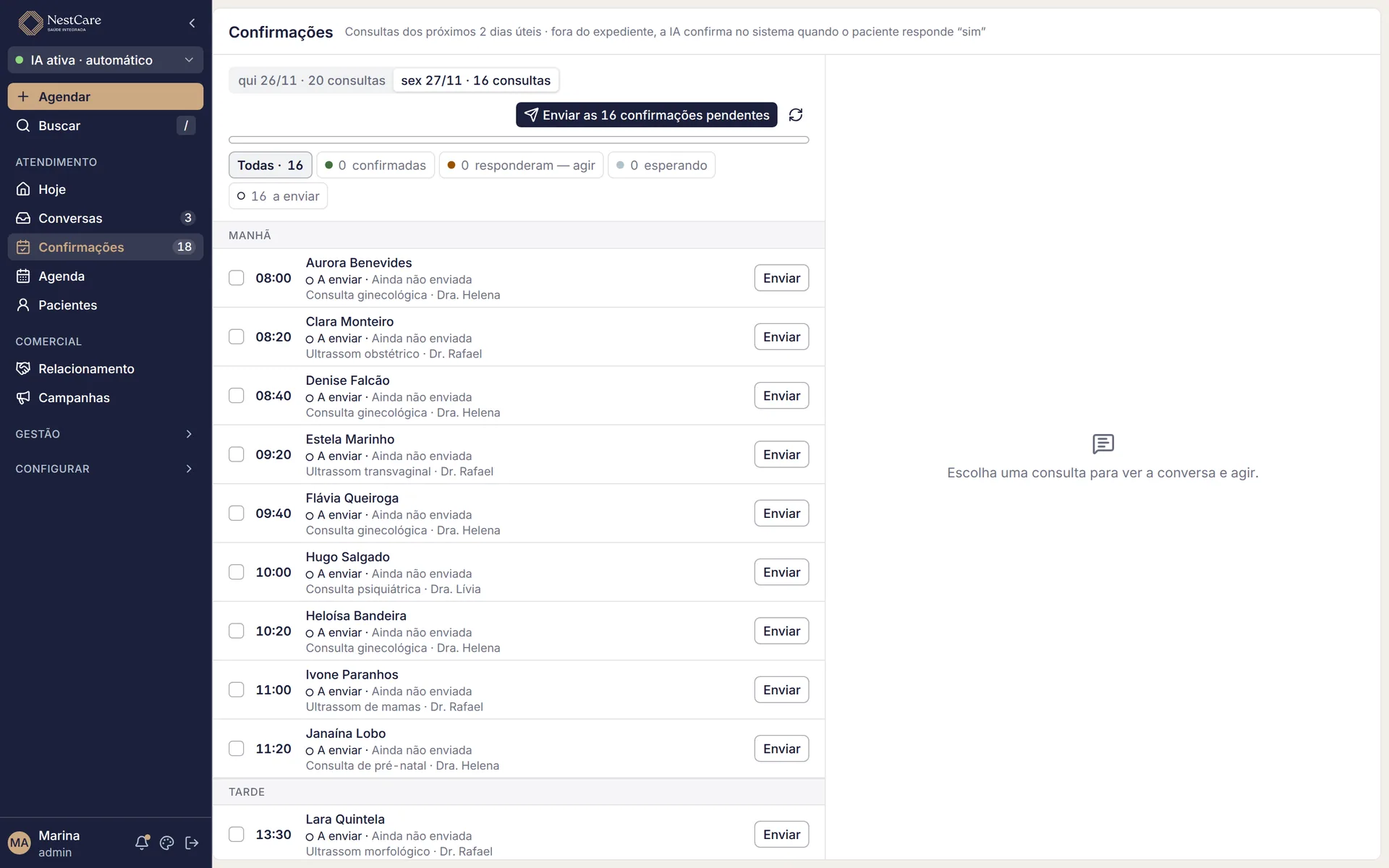
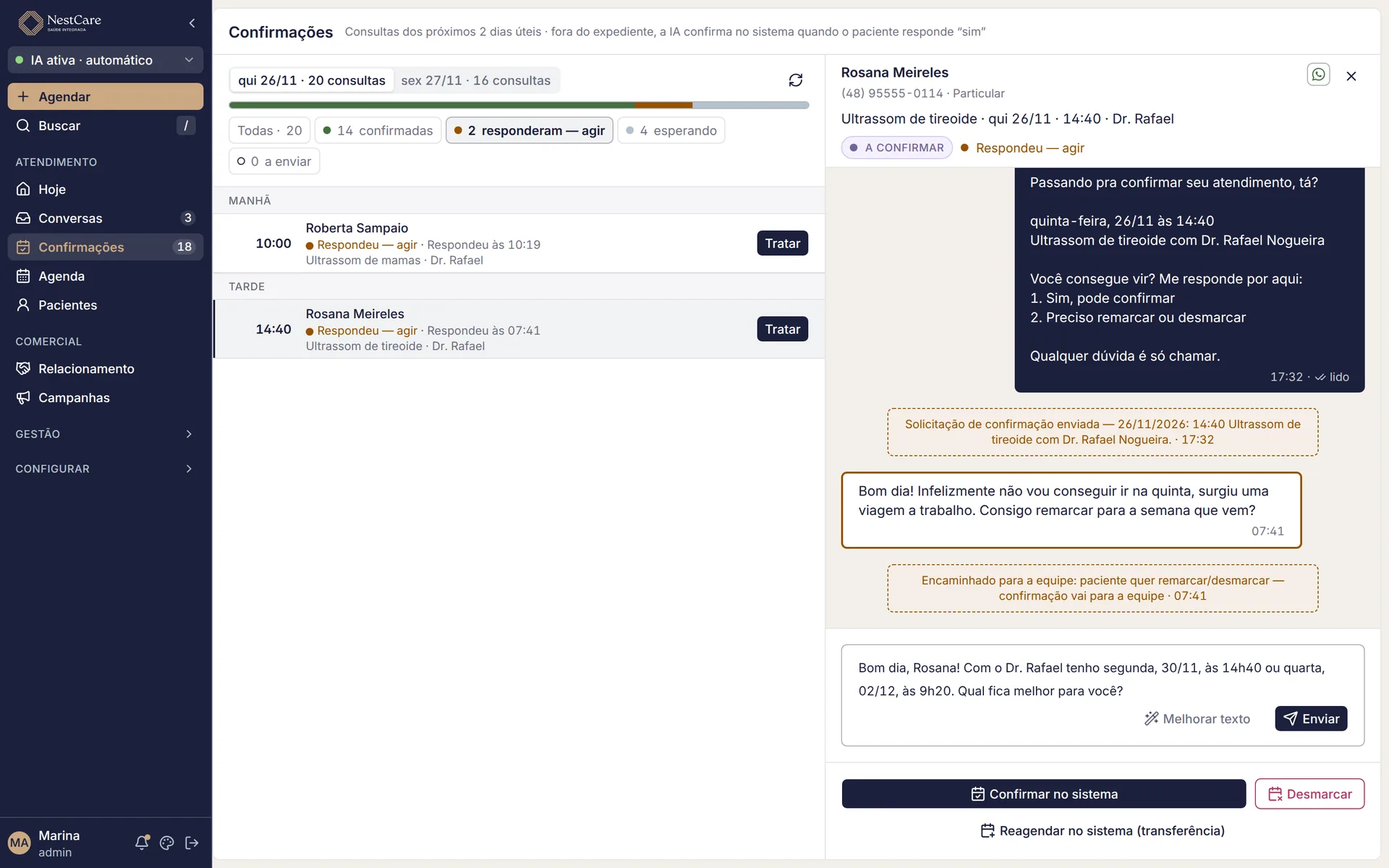
Confirmations

Confirming appointments means one message per patient, every day, and then remembering who answered. Now the next two working days sit on one screen and reception sends every request at once. The answers come back to the same list... a yes is one click away from confirmed, and whoever needs another time is already in a conversation, so reception answers right there.

05

The whole day on one screen

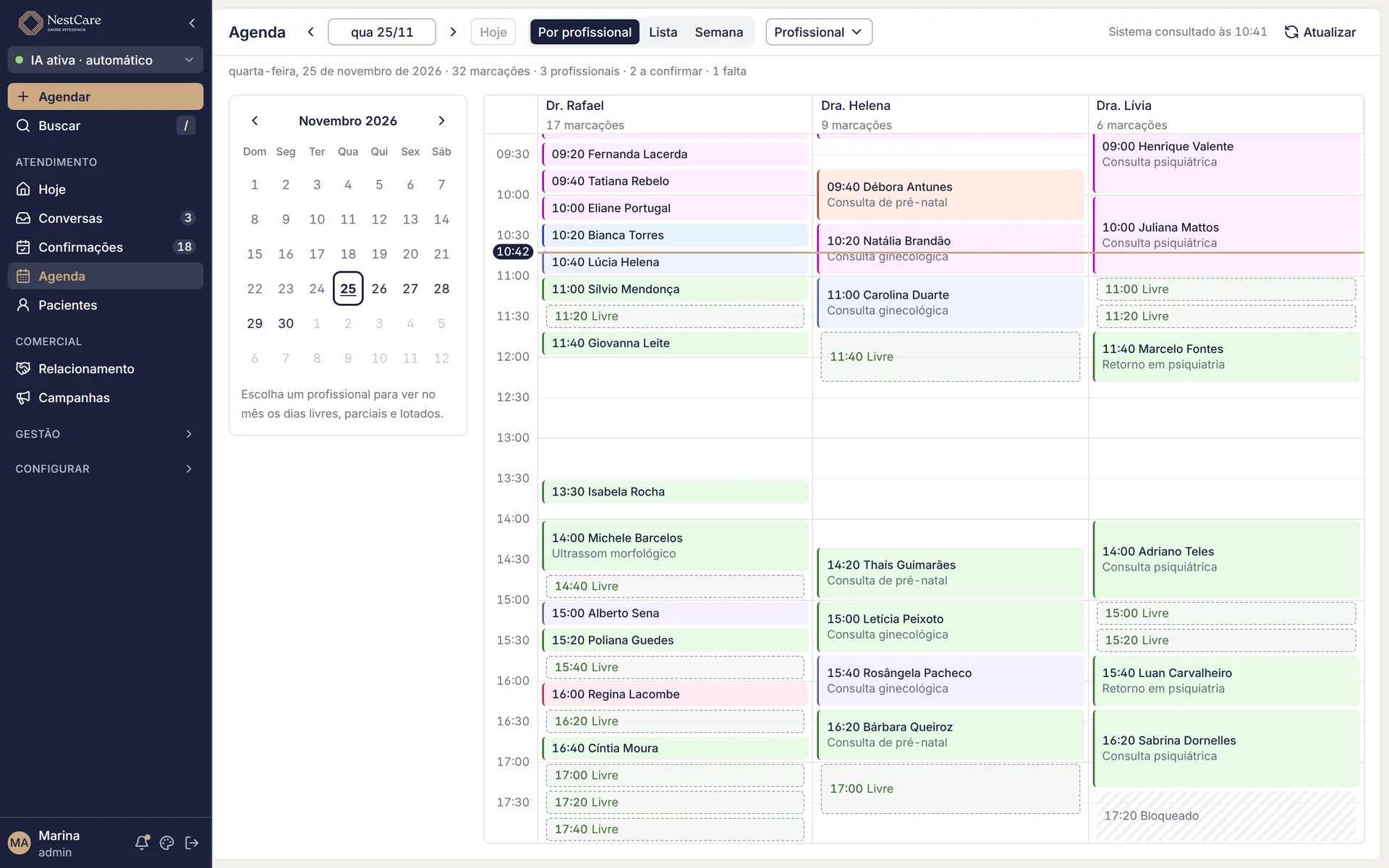
Agenda

The agenda puts the doctors side by side, with a line marking where the clock is. Reception sees who is coming next and where the gaps are. Click a gap and the booking opens with the doctor and the time already filled in.

06

Patients worth calling back

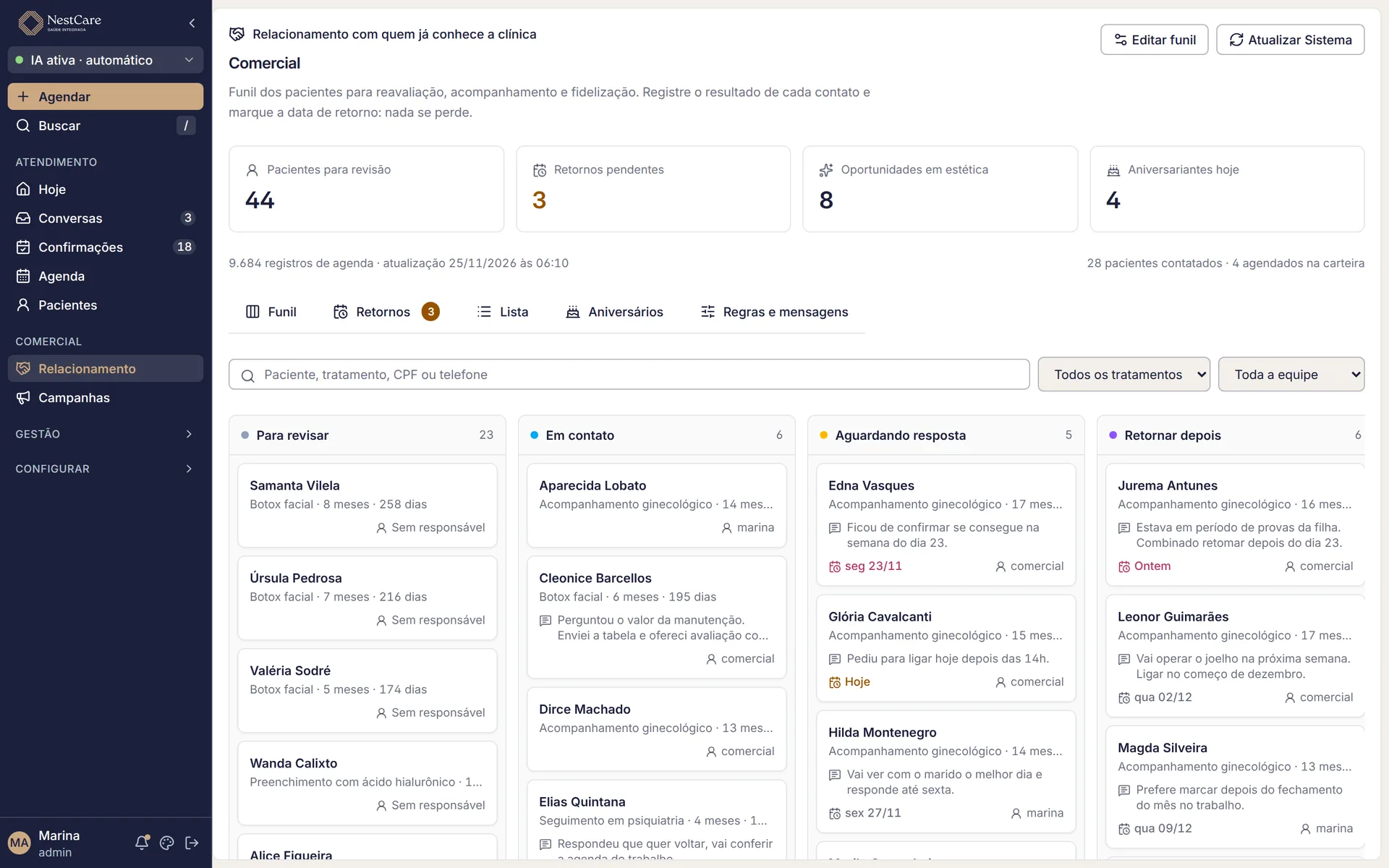
Returning patients

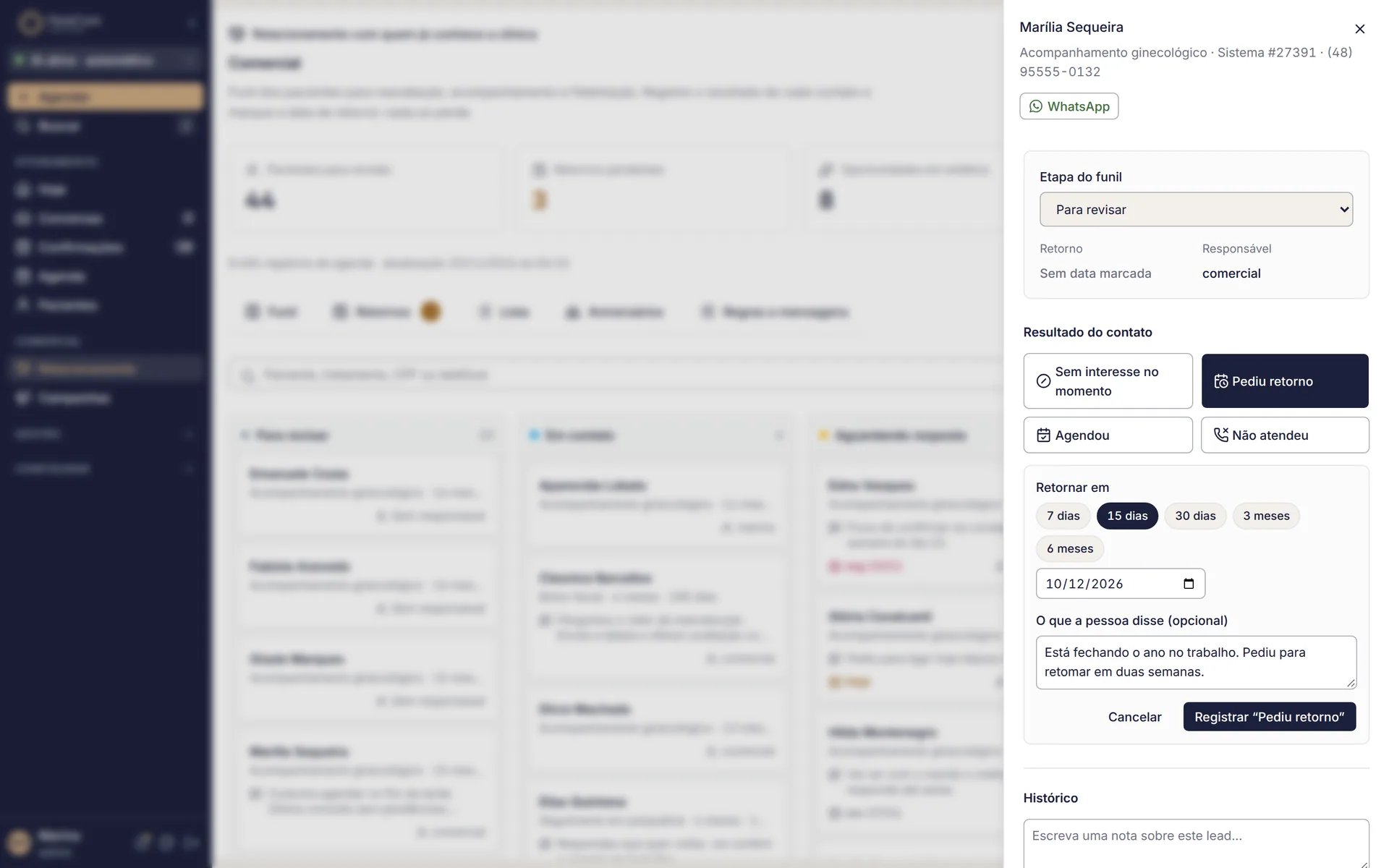
Some of the clinic's best leads were already in its records... people who came once and have a reason to come back. Finding them by hand would mean going through thousands of appointments, so this screen does the looking. It lists who is due and why, and gives the commercial side a small funnel to work each one: a note, the result of the contact, a date to try again.

07

Which ad filled the agenda

Campaigns

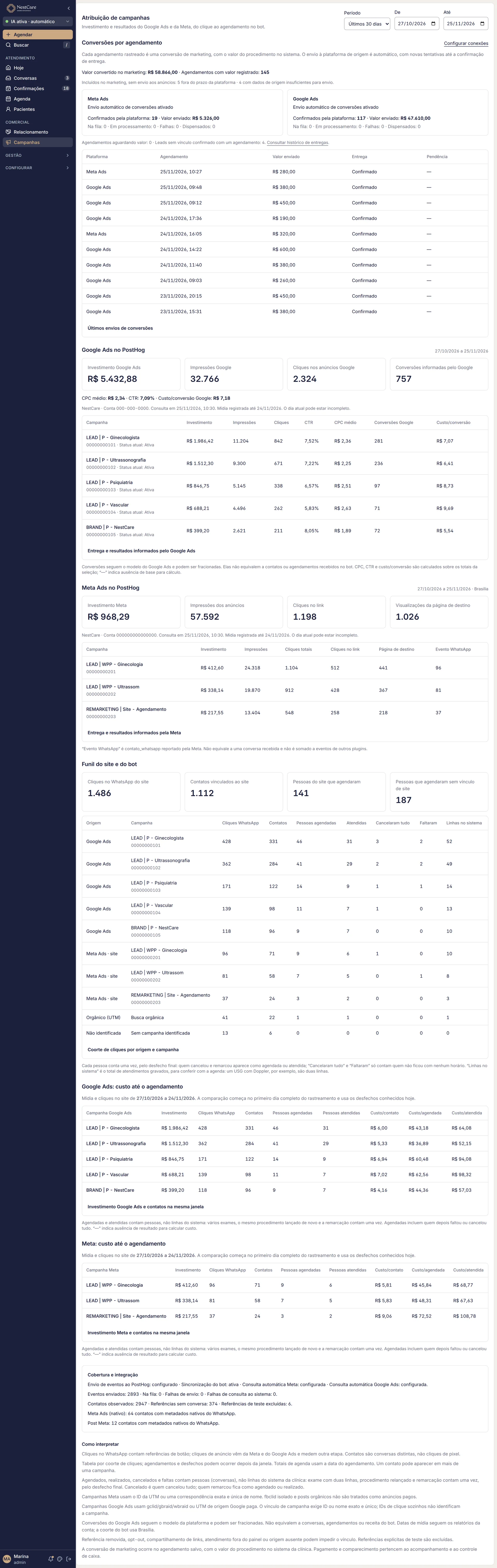
Ad spend lived in the ad platforms, conversations in WhatsApp and appointments in the clinic's management software. I connected the three. Each booking is traced back through the WhatsApp conversation to the ad that started it, so the clinic can see what every campaign is returning while it's still running.

08

The quieter screens

Guardrails, knowledge base and finance

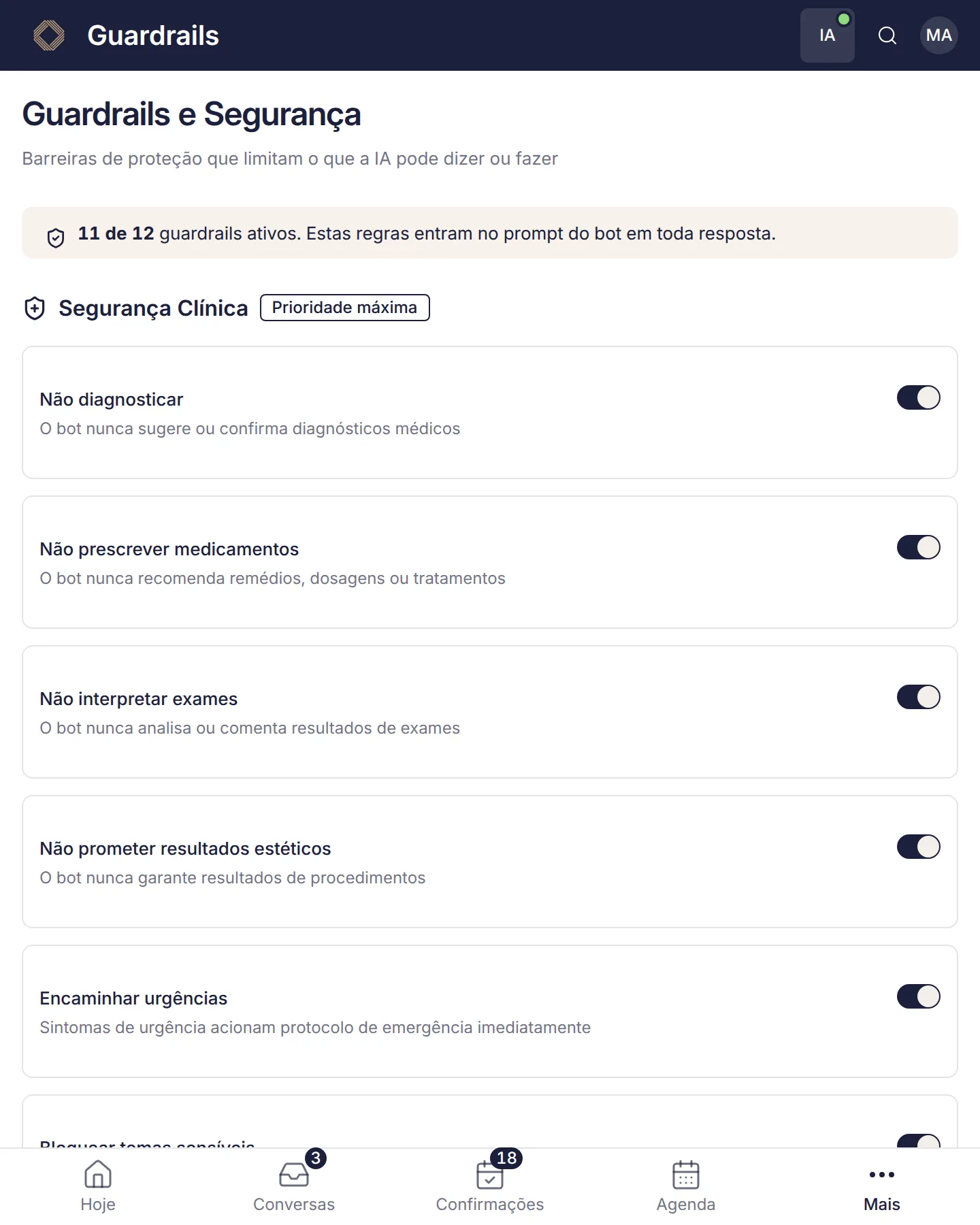
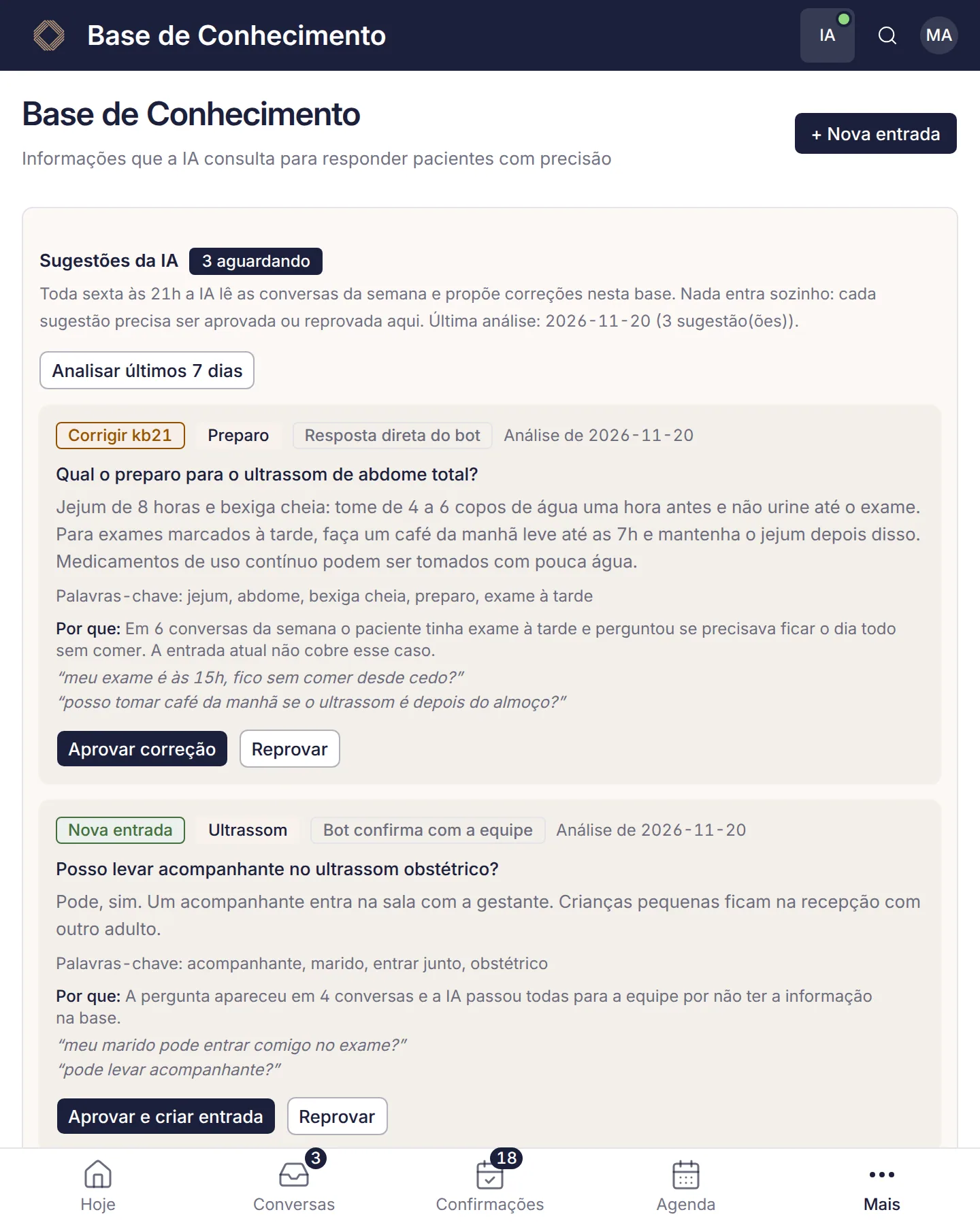
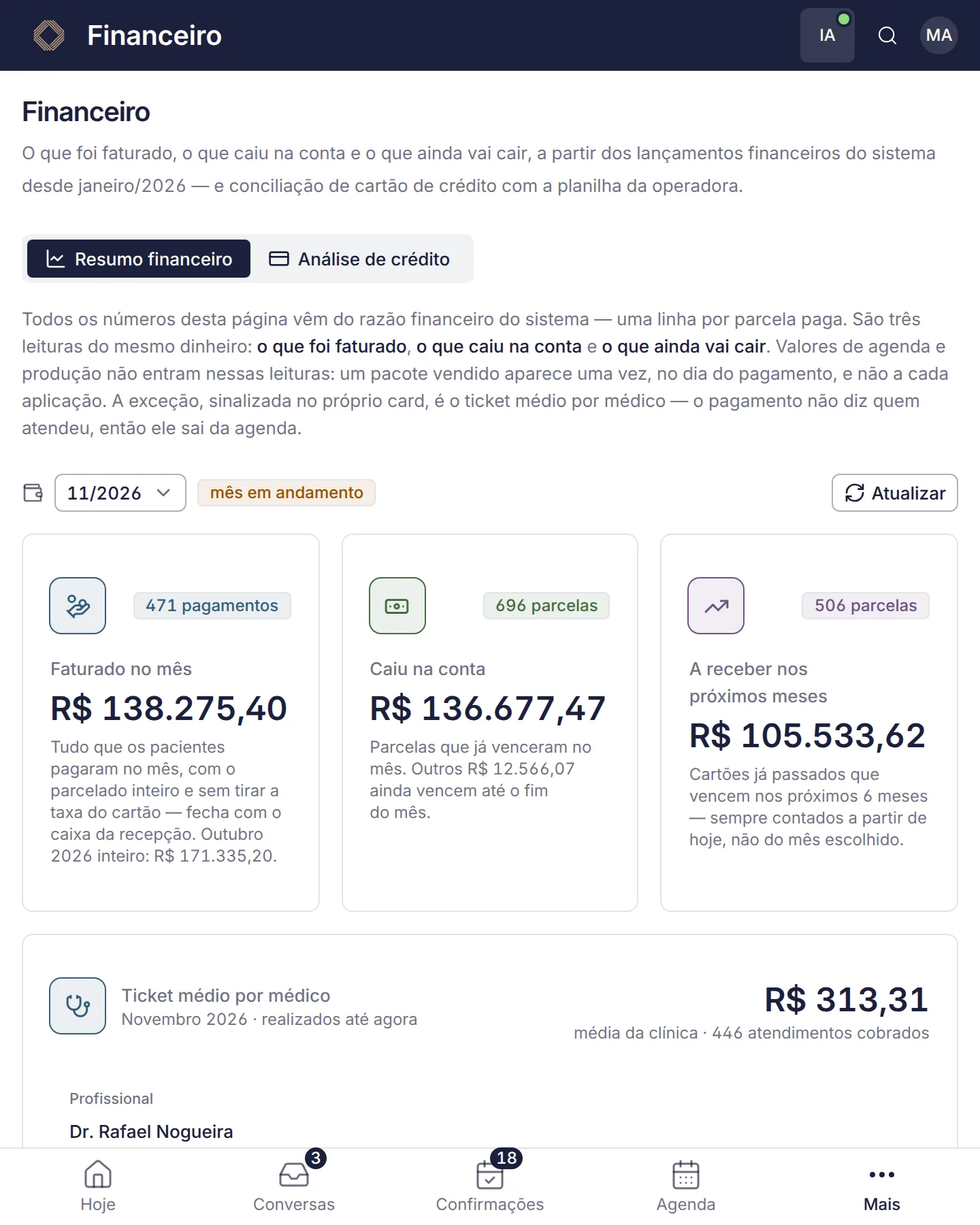
Some screens are opened less often and hold everything else up. Guardrails are the AI's limits written in plain language, so the manager can read each one and turn it on or off (it never diagnoses, never promises a result). The knowledge base is what the clinic teaches the assistant, and every week the assistant suggests what is missing for someone to approve. Finance shows what was billed, what landed in the account and what is still to come.

Read the full storyHide the full storyThe long version: context, decisions and trade-offs.

The Client

NestCare is a medical and aesthetics clinic in São José, in the south of Brazil.

Reception, a commercial closer and the manager spend their day inside the product I designed for them: an AI assistant on WhatsApp and the dashboard around it. I was the only designer, and I built it too.

The Problem

The clinic ran Google and Meta ads pointing to WhatsApp, and that part worked.

.. people wrote. Then they waited, because reception was answering with one hand and booking in the clinic's current management software with the other.

Almost one in five messages arrived outside office hours. Whoever wrote at night and needed a person got an answer about 14 hours later. And since ad spend lived in one tool and appointments in another, nobody could say which ad was filling the agenda.

The Solution

I started by reading 908 conversations between reception and patients, to learn how people ask and how the team answers.

It showed me two things. The assistant had to sound like reception (warm and short, no robot politeness). And the leads were being lost after the click, in the chat, long after the ad had done its job.

So the work went into the chat. I turned the inbox into a sales funnel that moves by itself, put booking inside the conversation, and let the AI lead whenever the team is away, with a failsafe for the busy hours. Around that came the screens that keep the day running: confirmations, the agenda, a list of patients worth calling back, and a campaign view that ties each booking to the ad that started it.

Results

With almost the same ad spend, bookings that came from an ad went from 55 to 145.

Each one used to cost R$ 123 and now costs R$ 50, and return on ad spend went from 2.3x to 7.5x.

I credit the whole funnel for that: the AI answering at any hour, a closer picking up the commercial conversations, and the campaign screen showing where the money was working. The AI alone wouldn't have done it.

Fair warning on the numbers... the two periods are short (28 and 34 days), ROAS is on booked value, and attribution is last touch. After no-shows and cancellations, my estimate is about 1.4x before and 4.6x after.

Next Project

From −63 to +42 NPS: The catalog buyers came back to